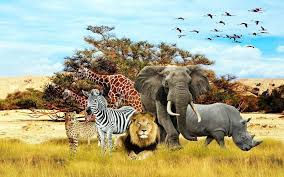
Why Humans Age So Poorly Compared to Animals in the Wild
At first glance, humans appear to age more visibly and functionally than many animals in nature. While wild animals often appear healthy for most of their lives and then decline rapidly, humans tend to experience a gradual, long-term reduction in energy, strength, and resilience.
This difference is not due to a single factor, but rather the environment in which each system operates.
Aging is not just biological—it is also environmental and systemic.
Wild Animals Live Within Biological Alignment
Animals in the wild live in environments that are tightly aligned with natural biological rhythms.
Their systems are influenced by:
-consistent light–dark cycles
-natural food sources
-high daily physical activity
-immediate response to environmental stress
-minimal artificial stimulation
This creates a life pattern that is closely matched to evolutionary design.
There is still aging in wild animals, but the trajectory is often compressed and less drawn-out compared to humans.
Humans Live in a Modified Biological Environment
Modern human environments differ significantly from natural conditions.
Humans are exposed to:
-artificial lighting that disrupts circadian rhythm
-processed and energy-dense foods
-chronic psychological stress
-prolonged sitting and low physical demand
-constant cognitive stimulation
-environmental pollutants and synthetic compounds
These factors do not directly “cause aging,” but they influence the biological systems that regulate energy, repair, and inflammation.
The Role of Chronic Stress
One of the key differences between humans and wild animals is the persistence of stress exposure.
In nature, stress tends to be:
-acute
-short-term
-followed by recovery
In modern human life, stress is often:
-continuous or repeated
-psychological rather than physical
-unresolved by physical action
This changes how the nervous system regulates energy and recovery over time.
Energy Expenditure Without Recovery Cycles
Wild animals operate in clear cycles:
-exertion → rest → recovery → repeat
Humans often operate in:
-continuous stimulation
-incomplete recovery cycles
-reduced physical reset periods
This affects metabolic efficiency and long-term resilience.
Inflammation as a Key Difference
One of the most important biological differences is chronic low-grade inflammation.
Wild animals generally experience:
-short bursts of inflammation (injury, hunting, stress events)
-followed by full recovery periods
Humans are more likely to experience:
-persistent low-level inflammation
-driven by diet, stress, environment, and lifestyle patterns
Over time, this contributes to gradual system inefficiency.
Aging Is Not Just Time—It Is Load
A useful way to understand this difference is:
Aging is not only a measure of time—it is a measure of accumulated biological load.
This includes:
-metabolic strain
-environmental exposure
-psychological stress
-recovery efficiency
Wild animals tend to accumulate less chronic load over time, even though their lives may be shorter in absolute duration.
What This Actually Means
This comparison is not about idealizing nature or suggesting humans should live like wild animals.
Instead, it highlights a key principle:
Human aging is strongly influenced by environmental mismatch.
The body is still operating on biological systems shaped by natural conditions, but the environment has changed significantly.
Final Thought
Humans do not age poorly because biology is fundamentally different from animals.
They age differently because the conditions under which human biology operates have changed.
Aging is the result of interaction between internal systems and external environment.
When those systems are under persistent load, aging becomes more noticeable and gradual.
When they are aligned with recovery, rhythm, and regulation, biological function remains more stable over time.
